
Political rhetoric often equates “change” with “progress” and views progress as both necessary and inevitable for national and cultural survival. But the two words are not equal. Progress means movement towards a better state or an improved condition. And change really just means different from what was. So, for example, changing the internet speed or changing the means of citizens’ technological gratification, does not mean that a nation or a culture has progressed.
It’s strange for me to think about how much has changed — not progressed — in the ten years that have passed since I returned to Jamaica or the one year since Hurricane Melissa made landfall here. And it’s even stranger to think about what changes — climate and otherwise — may be on the horizon. For these reasons, I am filing this post under speculative reality.
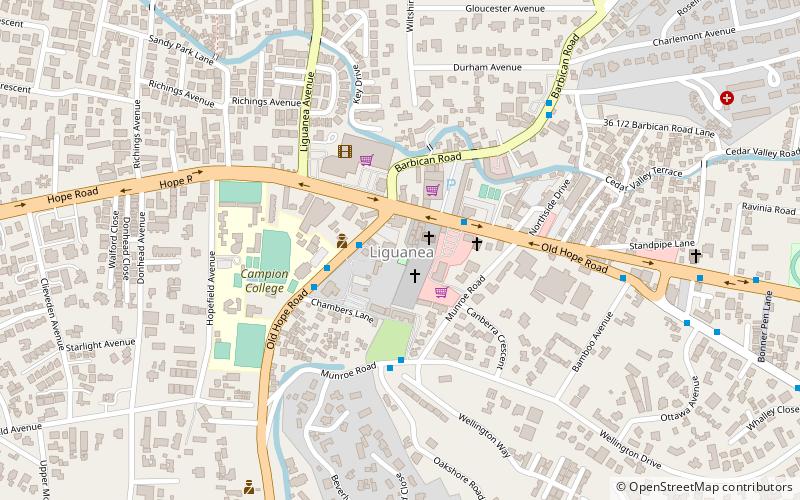
In the Liguanea area where I spend much of my time, healthy trees have been cut down, new residential and commercial buildings have gone up, but old schools and hospitals have not been renovated. Roads have been widened, but old traffic congestion, flash flooding and potholes remain. Despite the warnings about sewage threats to the Mona Reservoir, the permanent loss of endemic plants in the area, and the loss of habitat for migratory birds, developers have cleared the lands and are presently building expensive homes along active fault lines on Long Mountain. Over the last ten years, single family homes on Charlemont Avenue morphed into two and three-story apartment buildings. And Wellington Drive followed suit with major roadwork that continues to inconvenience everyone from Mona to Karachi to Beverly Hills. All of these changes are viewed as progress and development. But who benefits from all of these changes? Yes, the pipework is necessary to facilitate water and sewage expansion and updates, but where is the data to show that Liguanea needed more million dollar USD housing options? Where is the data to show that high-paying jobs have been created in Jamaica thus allowing Jamaicans to be able to afford these homes? And where is the data that proves that national ideas of progress are worth more than permanent environmental changes?
Wellington, Long Mountain, and Charlemont are examples of the changes that we can see. But there are many more that go unseen and unheard.
These days, when I am outside, I keep my ears open. I launched the Listen Jamaica: Sound Gallery in 2025 as a sonic archive of Jamaica’s natural environment and I am grateful for the ways that this project has increased mine and listeners’ appreciation for Jamaica’s waters, birds, and breezes. With audio equipment in tow, I remember driving out to Judgement Cliff earlier this summer. The cliff, which is a 1,000 foot drop-off caused either by an earthquake induced landslide or intense hurricane rainfall in 1692, splits from a section of Mount Sinai in the lower Yallahs Valley in the parish of St. Thomas.
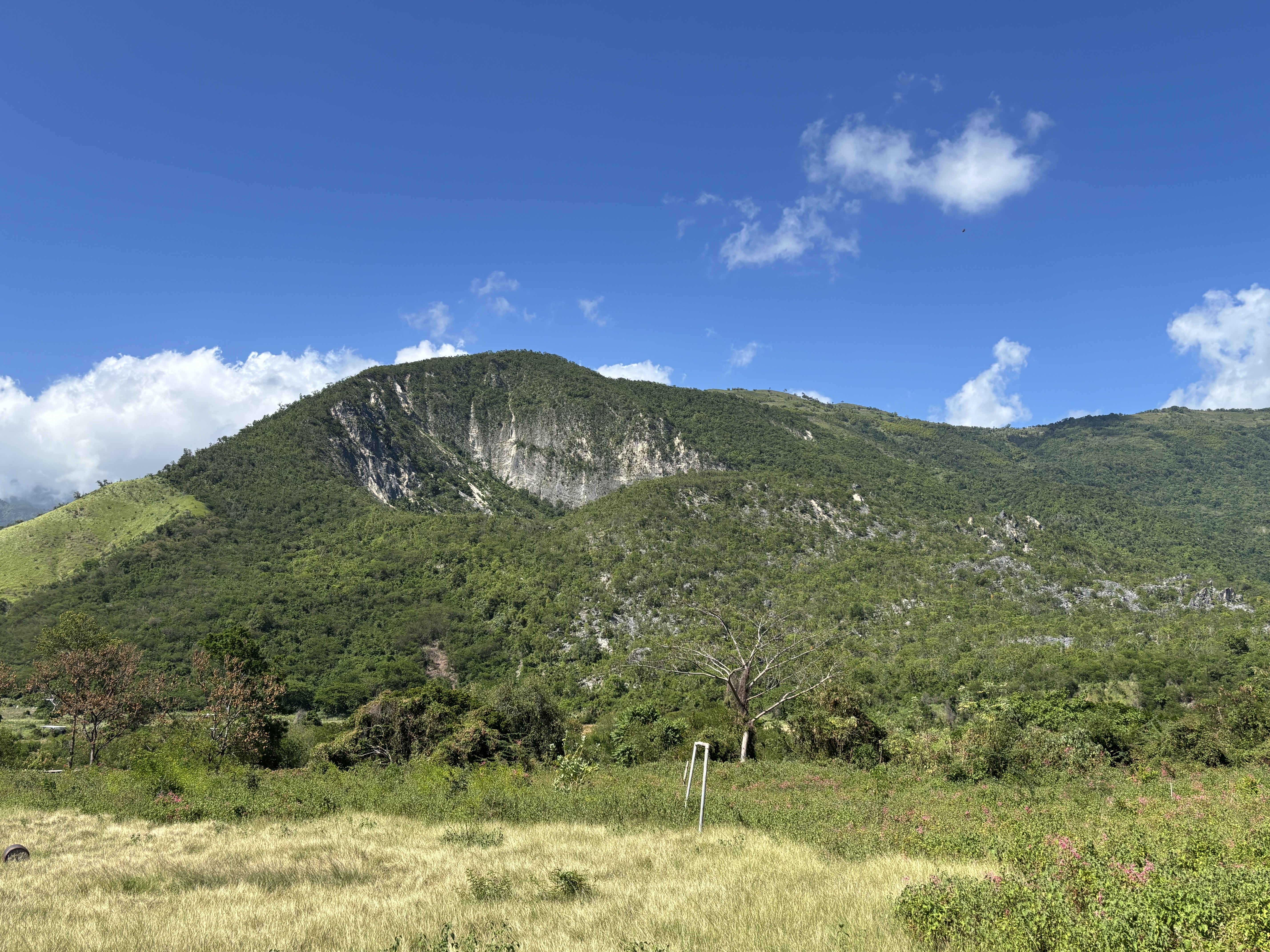
Driving to the site with my daughter as my fellow listener, was startling. Climbing the winding roads to our destination, we met folks and chatted with a few as we passed through tiny communities and small farms. There were goats dragging their ropes as they ascended the hillside for food. There were beautiful birdsongs coming from the trees. And at times, without warning, where the paved road would become dirt road or gravel road, the distant beep of reversing heavy machinery could be heard. High in these hills, land was being cleared. By whom and for what purpose, we wondered. I also wondered which people, which birds and which goats would be displaced if this mountainous area continues to be developed.
Jamaica is under construction in more ways than one. Sometimes the cost of progress is obvious — like the unexpected traffic jam because a backhoe is at work. But, there are other times when the cost is unseen from the ground.
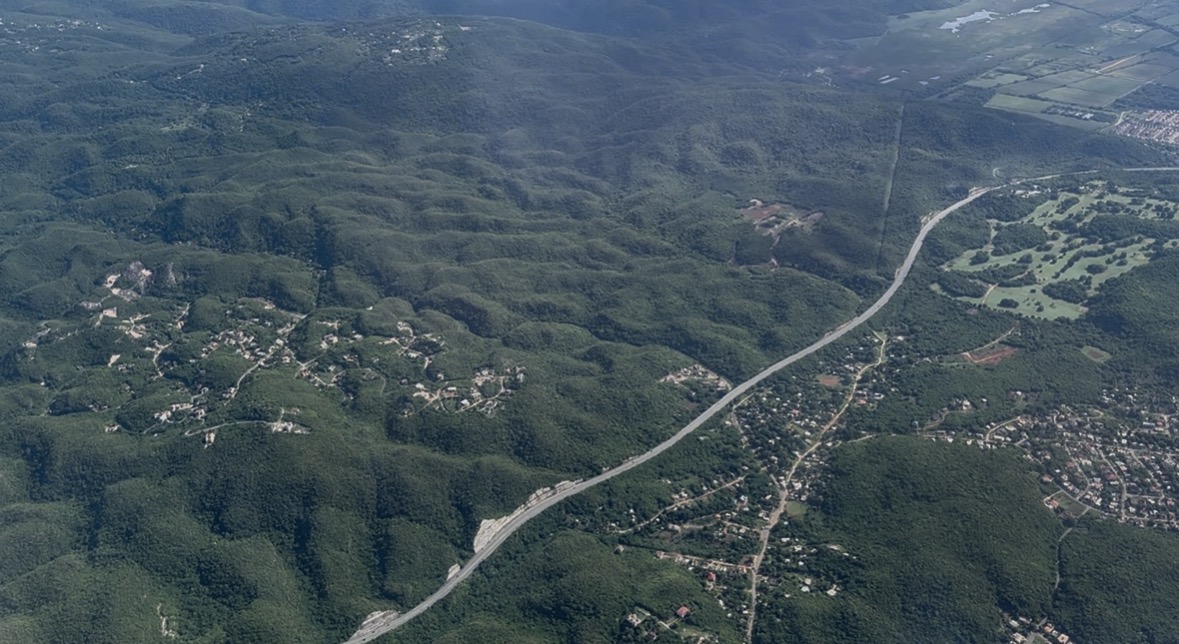
When I have the opportunity to fly over and out of Jamaica, I cannot help but look out the window at my dear island with wonder. I wonder about the many satellites floating high above our atmosphere. Sure, rural parts of Jamaica and those parts particularly devastated by Hurricane Melissa now have access to the internet thanks to Starlink’s technology, but what might Jamaica be opening itself up to in exchange for internet access?
I look down from the airplane and wonder what our forests conceal. There are parts of Jamaica, like lower Yallahs Valley, that see very few visitors, yet development is taking place there unseen from the main road. And there are parts like the Cockpit Country that we assume are out of developers’ reach, but private owners own parcels of land all across the Cockpits and private developers can sell land to developers as they wish. Looking down from my tiny airplane window, I squint, trying to see what could be hiding, but the dense karst topography makes spotting secrets difficult.
With continued and necessary attention on the difficulties that Jamaicans face accessing our own coastline — such as the 2020 plan to build a 250 acre St. Regis Hotel in Bull Bay and the threats to displace communities from Bob Marley Beach — have we lessened our attention on the interior? Could legal loopholes one day allow those claiming ownership of Jamaica’s interior the right to sell Jamaica’s interior? We have protested for a ban on bauxite mining in the Cockpits, but imagine quiet development in the Cockpit Country. We have feared quarrying and mining at the buffer zone, but as technology develops and demands more and more resources, new threats come. In April 2025, the United Nations Development Programme published a report stating that “the question is no longer whether LAC [Latin American and the Caribbean] will experience an AI and data centre boom, but whether it will leverage this infrastructure surge in a coordinated manner to foster self-sustaining innovation or remain a supplier of natural resources and a consumer in the unfolding digital revolution, just one cloud away from becoming a key player.” And in May 2026, digital strategist Keron Rose, writing a lengthy Jamaica Observer article about AI infrastructure in the region, said:
That is why this conversation should not be limited to which AI tool is best. The better question is what kind of AI capability the Caribbean wants to build locally. This includes data centres, cloud partnerships, technical talent, AI governance and regional business applications.
Just this summer, Trinidad (July 2026) and Guyana (August 2026) proposed to move ahead with large scale data centres in their respective nations, despite environmental concerns. So, I wonder, where might a Jamaican data centre be built? And could a data centre be approved by our National Environment and Protection Agency? Hyperscale and large-scale data centres need massive amounts of electricity to operate and water to cool the system. It would be an environmental risk (perhaps catastrophe) for Jamaica to enter into the data centre business, but our country/ region seems eager to wholly embrace AI in the name of progress. With the idea of “sovereign” data control and millions of US dollars on the table, will we be able to exercise the necessary caution?
Here in our real Jamaica — an island full of plants, people, and potential — new, dangerously irreversible AI possibilities of exploitation exist alongside a now 500 year old interest in Jamaican gold and copper (mining is underway in Bellas Gate, on the border of St. Catherine and Clarendon in 2026). This is what we are facing, for better (for progress?), or worse. As many people continue to worship AI for its convenience, I pray we pause at building local altars to Artificial Intelligence. Can we afford the environmental impact, sound pollution and health concerns, PFAS (forever chemicals), and carbon emissions? LeoLabs shows us live, real-time images of the satellites and space junk sailing over Jamaica and I know that the Skatallites never could have imagined this day. They never could have speculated this reality. This reality is best left to the poets who read history as a forecast. So, I will let Olive Senior have the last words (of caution) here.
Read with care the opening stanzas of 2021-2024 Poet Laureate of Jamaica, Olive Senior’s “Meditation in Yellow” (Gardening in the Tropics, 1995):
At three in the afternoon
you landed here at El Dorado
(for heat engenders gold and
fires the brain)
Had I known I would have
brewed you up some yellow fever-grass
and arsenic
—
but we were peaceful then
child-like in the yellow dawn of our innocence
—
so in exchange for a string of islands
and two continents
—
you gave us a string of beads
and some hawk’s bells
—
which was fine by me personally
for I have never wanted to possess things
I prefer copper anyway
the smell pleases our lord Yucahuna
our mother Attabeira
it’s just that copper and gold hammered into guanín
worn in the solar pendants favoured by our holy men
fooled you into thinking we possessed the real thing
(you were not the last to be fooled by our
patina)


